
What Actually Goes Into the Buffet
Ingredients & Quality Commitment in Lansing for diners who want transparency about sourcing, preparation standards, and how freshness gets maintained during service
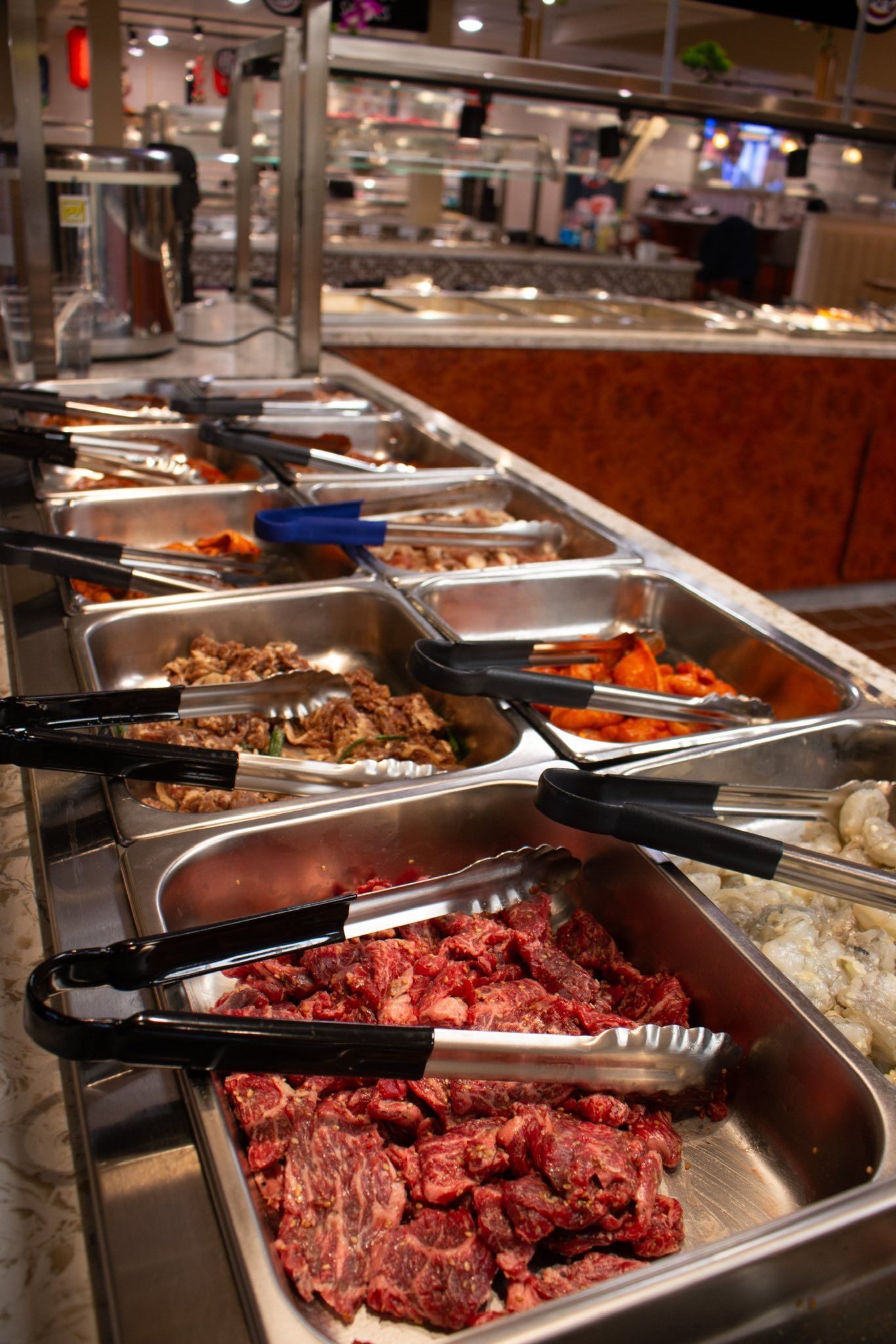
Buffet replenishment schedules at IPOT Hot Pot BBQ & Sushi Buffet follow ingredient turnover rates rather than arbitrary time intervals, meaning high-demand items like marinated short ribs and raw shrimp get restocked as soon as trays drop below threshold levels instead of waiting for fixed hourly rotations. This approach prevents the scenario where popular proteins disappear for extended periods while less-requested items sit untouched. You'll notice consistent availability across meat, seafood, and produce stations because kitchen staff monitor buffet levels in real time and prep replacement batches during service rather than relying solely on pre-shift preparation.
The variety spans marinated meats, fresh seafood, and seasonal vegetables sourced to support the interactive cooking format. Marinated proteins arrive pre-seasoned with specific flavor profiles—garlic soy, spicy gochujang, sesame ginger—which eliminates the need for diners to build marinades from scratch while still allowing customization through dipping sauces and cooking techniques. Seafood selection rotates based on supplier availability and quality checks, prioritizing shellfish and fish that hold up to boiling and grilling without falling apart or turning rubbery.
Visit during peak dinner hours to see the full ingredient selection when turnover rates keep the buffet at maximum variety.
How Preparation Standards Affect What You Cook
Food safety and handling protocols focus on maintaining separation between raw and cooked items, with dedicated tongs and serving utensils at each buffet station to prevent cross-contamination. The spacious dining environment allows for distinct buffet zones—raw proteins in one area, produce and noodles in another, sauces and condiments separated further—so you're not reaching across raw meat to access vegetables or accidentally mixing utensils between stations.
Once you return to your table with ingredients, you control cooking times and temperatures, which means the quality of your meal depends partly on your technique. Pre-marinated meats reach optimal flavor faster than unseasoned cuts because the marinade has already penetrated the surface, reducing the risk of undercooking while chasing taste. Fresh seafood cooks quickly in hot pot broth or on tabletop grills, usually within one to three minutes depending on thickness, so monitoring your stations prevents overcooking that toughens shrimp or dries out fish.
The clean interior design includes wipeable surfaces and open sightlines to buffet prep areas, which allows you to observe replenishment and judge ingredient freshness before plating. Consistency in buffet quality relies on this visible accountability—when customers can watch staff restock and handle food, preparation standards stay higher than in closed-kitchen models where back-of-house activity remains hidden. Attentive staff support includes answering questions about specific ingredients, cooking recommendations for unfamiliar items, and clearing finished plates to prevent table clutter from interfering with active cooking.
Questions About Sourcing and Food Handling
First-time diners and health-conscious customers often ask about ingredient origins, preparation methods, and how the restaurant maintains quality across extended service periods.
What does "fresh ingredient sourcing" mean for a buffet-style restaurant?
Proteins and produce arrive daily or every other day depending on shelf life and turnover rates, with seafood deliveries timed to Lansing's peak service days to minimize time between supplier shipment and customer service.
How are marinated meats prepared before they reach the buffet?
Marinades get applied in-house several hours before service, allowing flavors to develop without over-saturating the meat, then proteins are sliced to consistent thickness so cooking times remain predictable when you grill or simmer them.
When do buffet stations get replenished during busy service periods?
High-turnover items like beef and shrimp restock every fifteen to thirty minutes during peak hours, while slower-moving vegetables and noodles refresh hourly or as needed, with staff monitoring levels continuously rather than waiting for complete depletion.
What food safety measures prevent cross-contamination at self-service buffets?
Color-coded utensils correspond to specific food categories, separate tongs stay at each station, and regular staff checks remove and replace any utensils that get misplaced or contaminated during guest service.
How does the restaurant handle dietary restrictions or ingredient allergies?
Buffet labels identify major allergens and primary ingredients, though the shared cooking environment and open buffet setup mean cross-contact risk remains higher than single-plate kitchens—staff can clarify ingredient contents but can't guarantee isolation for severe allergies.
IPOT Hot Pot BBQ & Sushi Buffet's ingredient quality relies on frequent replenishment and visible preparation standards rather than back-room processes you have to trust blindly. Stop by during peak service to see buffet turnover in action and ask staff about specific ingredient details before plating.